
Antioquia celebrates its 200 years of creation and industrial development
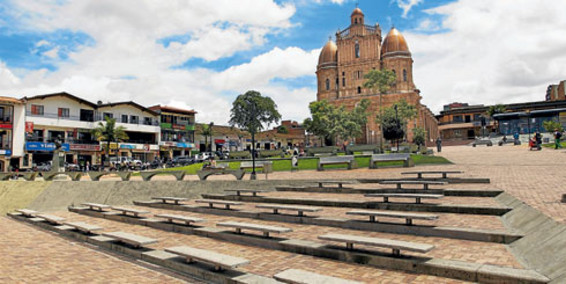 The department has 133,000 registered companies.
Medellin. The growth and sustained development of Antioquia, for tomorrow will hold 200 years of the signing of Absolute Independence Act, are due to industrial and commercial vocation began to take shape in the late nineteenth century, thanks to the wealth generated by mining, according to economists and historians.
The Chamber of Commerce of Medellin says the department has 133,000 registered businesses and a GDP amounting to 47,000 million, representing about 13 percent of GDP. Only in the past year have created 14,000 companies, so it is expected to grow 4.5 percent, higher than expected in the country.
Although the firms created between 2000 and 2012 (182,000) only 52 percent (94,640) exists today, Lina Velez Nicholls, president of the Chamber, notes that 89 percent of companies in Antioquia exceed first year of operation and 65 percent survive into the fifth year, which indicates that there remains a business culture.
The former Minister José Antonio Ocampo, during a forum last scheduled Antioquia University, said that despite the deindustrialization process that crosses the country from the economic opening 90, the department has achieved "reconvert, not to be left behind, despite the unfavorable scenario for the industry and its loss of share in national GDP ".
According to the president of ANDI, Luis Carlos Villegas, sales, Antioquia industry grew by 2.6 percent, while the installed capacity to May stood at 77.5 percent, growth behavior in accordance with national figures .
"The creation of companies in Antioquia in recent years rose 4 percent, one point above the national average. Have been falling, but that does not mean that the situation is bad. A reflex is that private investment was above 10 percent. This is a symbol of confidence, "said Jaime Echeverri, planning director of the Chamber of Commerce of Medellín.
For his part, Juan Camilo Escobar, PhD in history and Eafit University researcher, said the current prosperity of Antioch was favored by the natural wealth, and that the great challenge now is related to the solution of economic problems related to inequality, poverty and social inequality, similar to the rest of the country and Latin American cities.
Tribute with flower parade
In alluding to the mule saddles, coffee growing, independence, indigenous culture, rail and innovative city, the Flower Fair in Medellin will perform tomorrow a tribute to Antioch in 200 years. Also, tomorrow ends the Great Fair of Antioquia, Plaza Mayor, a space organized by the Government and the Mayor for visitors to learn about the culture, food and traditions of its 125 municipalities.
Police already have tracks murderer of 8 year old girl
The victim was killed by a close neighbor, as the police said.
The murder of 8 year old girl, occurred last weekend at the La Polka Abejorral (Eastern Antioquia), would by unclear.
The Antioquia police commander, Colonel Gustavo Chavarro, said the person who would have killed a neighbor.
"According to the evidence the murderer is a person who lives near the home where she lived and where he usually was walking to his school," said the official.
Although it was initially believed that the child had been sexually abused early necropsy results realized that it was not.
"For unofficial information know that she has no wound violent sexual intercourse. What presents are several bladed weapon wounds, one of which was what caused her death, "he added Chavarro who described the killing as a horrific event.
On Monday, before his burial, family, neighbors and residents of Abejorral, staged a 'March of Silence'. With this, the protesters rejected the murder and demanded justice in the case that the city mourned.
The mayor offered to 5 million for information leading to the murderer of the girl while declared two days of mourning.
Colonel Chavarro, however, are sure to capture achieved without rewards because "the community is working with valuable information."
This is the first homicide that occurs in Abejorral so far this year
In the last 200 years, this region has had an active participation in national development.
A year after signing the Act of Independence of Antioquia, despite the influence of mining in this province was declared freedom of wombs, that the children of slaves were born free.
Following the historian David Bushnell, the measure was extended in other regions of the country upon completion of the civil wars of the nineteenth century, which became the first step towards the abolition of slavery.
Although Antioch was not an important province during the Viceroyalty and the first decades of the Republic, according to Andres Botero, an expert in legal history, several regulations issued in this region had a national impact, as the Constitution of the State of Antioquia in 1812.
"The Mining Code, issued in the second half of the nineteenth century, was the basis for other states and for the nation then. In addition, for commercial and industrial development of Medellin end of the century, commercial law gained national recognition. Similarly, this is one of the regions that has contributed to the high court lawyers, "says Botero.
On the economic front, the former minister and economist Jose Antonio Ocampo, argues that from Antioch was pressed for the release of the monopoly of the mid-nineteenth snuff during federal governments. In this region also eliminated the fifth tax (gold) and consolidated the monopoly of liquor, as support for its treasury.
"Antioch was isolated from the conflicts in other regions and that allowed him to have a significant economic development. It was one of the winners for federalism, a period in which there was an unprecedented expansion of exports, "says Ocampo.
Experts also cite the mine El Zancudo, in Titiribí, initiated in the late eighteenth century, and for the next century was the only one thousand employees, so that it became, in the words of Ocampo, in "the most important capitalist enterprise of Colombia ".
Equally important was the steel industry that developed in The Foundry, in Amagá, where they produced pistons for mine and then for coffee pulping. Juan Camilo Escobar, PhD in history, says all these knowledges and practices were the basis for early twentieth modern industry began.
The coffee export boom Viejo Caldas starring in the first decades of the twentieth century were also a result of the colonization of Antioquia, which avoided the concentration of land ownership and small and medium emerged coffee farms.
The country's rail network fivefold in the first three decades of the century, thanks in part to the completion of the railroad from Puerto Berrio, Antioquia and La Pintada. For the engineer and historian José María Bravo, this was the main business of the department in the last century.
The junction of this line with the Pacific railroad took prominence because Cali Medellín became the third business center of the country, but according to Ocampo, the Antiochian responded with industrialization, still in development.
Antioquia was autonomous in politics since 1811
Juan Camilo Escobar, Doctor of History, says that before the August 11, 1813 and was autonomous Antioquia because in December 1811 had formed a Constituent Assembly to frame the Constitution of 1812, which broke ties with Spain.
"The Act of Absolute Independence signed 200 years ago it was a political and military strategy to identify families who sympathized with the Crown, under the threat of reconquest. It included every village rituals to swear loyalty to the Constitution, under penalty of exile or execution, "says Escobar.
10 made their mark
Libya Historian J. Restrepo, mentions some key events over the past 200 years.
In 1863 he founded the Mint.
In 1864 he opened the School of Arts and Crafts.
In 1871, the State College takes its name from University of Antioquia.
In 1871 he created the Bank of Antioquia.
In 1873 born the Faculty of Medicine of the U. A.
In 1874 construction began on the Ferrocarril de Antioquia.
Pope Pius IX created the Diocese of Medellín in 1868.
Born in 1887 the National School of Mines.
In 1899 he founded the Public Improvement Society.
It creates the Chamber of Commerce of Medellín in 1904.
In 1905, the Company creates Fabrics Antioquia, followed Coltejer, Roussillon and Fabricato.
It creates the Metropolitan Area of the Aburrá Valley in 1980.
In 1955 he created Medellín Public Enterprises.
Opening of the Metro de Medellín in 1995.
Contacto
iebs.webnode.esCarrera 78 C # 104 F 78 Barrio: Santander - Medellín
472 05 72
iebarriosantander@hotmail.com